
Substrate Preparation & Concrete Repair
The foundation of every epoxy floor in Accra — ICRI CSP profiling, slab moisture testing and remediation (ASTM F2170/F1869), and crack and concrete repair before any coating commits. Epoxy GH — quote-first, cost-transparent, since 1981.
Substrate preparation is the discipline that decides whether an epoxy floor performs for years or fails within months — and it is the foundation under every other system Epoxy GH installs. Before any resin is committed, the concrete must present the correct moisture state, profile, soundness and structural integrity, measured against recognised standards. Substrate engineering is not a preparatory courtesy; it is a specification-grade phase in its own right. Epoxy GH has prepared and coated concrete slabs across Accra since 1981.
Every Coating Is an Adhesion Problem — and Adhesion Lives Beneath
The resin almost never fails; the slab beneath it does. In Ghana’s persistent 81–83% relative humidity, moisture vapour rising through an untested slab builds osmotic and hydrostatic pressure under the coating and lifts it — blistering, delamination and peeling within months. It is the single most common epoxy-floor failure in the country, and almost every failed floor skipped one step: slab moisture testing before the resin went down.
We treat moisture as the primary engineering control. Before any preparation begins we test in-situ relative humidity to ASTM F2170 and moisture-vapour emission to ASTM F1869, and we profile to ICRI CSP — the Concrete Surface Profile scale, the correct reference for a concrete slab, not the steel-only ISO 8501. That discipline — not the brand of resin — is what makes a floor last in this climate.
When Substrate Preparation Is Decisive
New-Build Handover
Concrete curing windows and residual moisture must be independently verified (ASTM F2170/F1869) before specification coatings are applied to a new slab.
Renovation & Recoat
Existing coatings, oil penetration, contamination and delamination must be diagnosed and treated — not concealed under a fresh coat that lifts with the old one.
Cracked, Dusting or Failing Slabs
Crack treatment, laitance removal and polymer-modified concrete repair reinstate a structurally continuous, sound surface before any profile is cut.
High-Consequence Floors
Pharma, food-grade, logistics and showroom floors where coating failure carries operational or reputational cost — the floors where preparation matters most.
The Moisture-Testing & Profiling Doctrine
| Test / standard | What it measures | Why it decides the floor |
|---|---|---|
| ASTM F2170 | In-situ relative humidity (probes at 40% slab depth) | The dominant pre-install moisture test; the system and primer are chosen to this reading |
| ASTM F1869 | Calcium-chloride moisture-vapour emission rate | Surface vapour load; flags slabs that need a vapour-suppression primer |
| ICRI CSP | Concrete surface profile after preparation | The mechanical key the resin bonds to — concrete uses ICRI CSP, not the steel-only ISO 8501 |
| ASTM D3359 | Adhesion of the prepared/primed surface | Verifies the prepared base will actually hold the coating |
How We Prepare a Slab
- Slab moisture & condition testing — ASTM F2170 in-situ RH + ASTM F1869 MVER, soundness and contamination assessed before anything else.
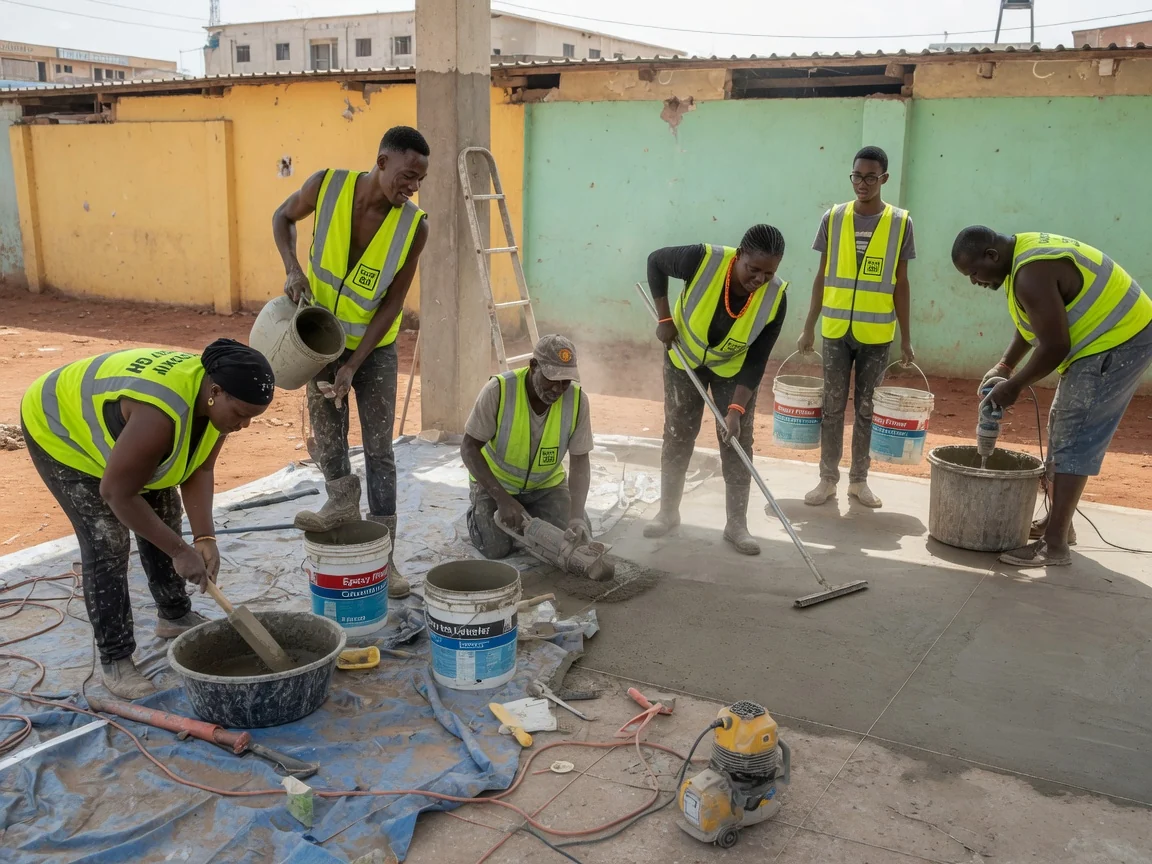
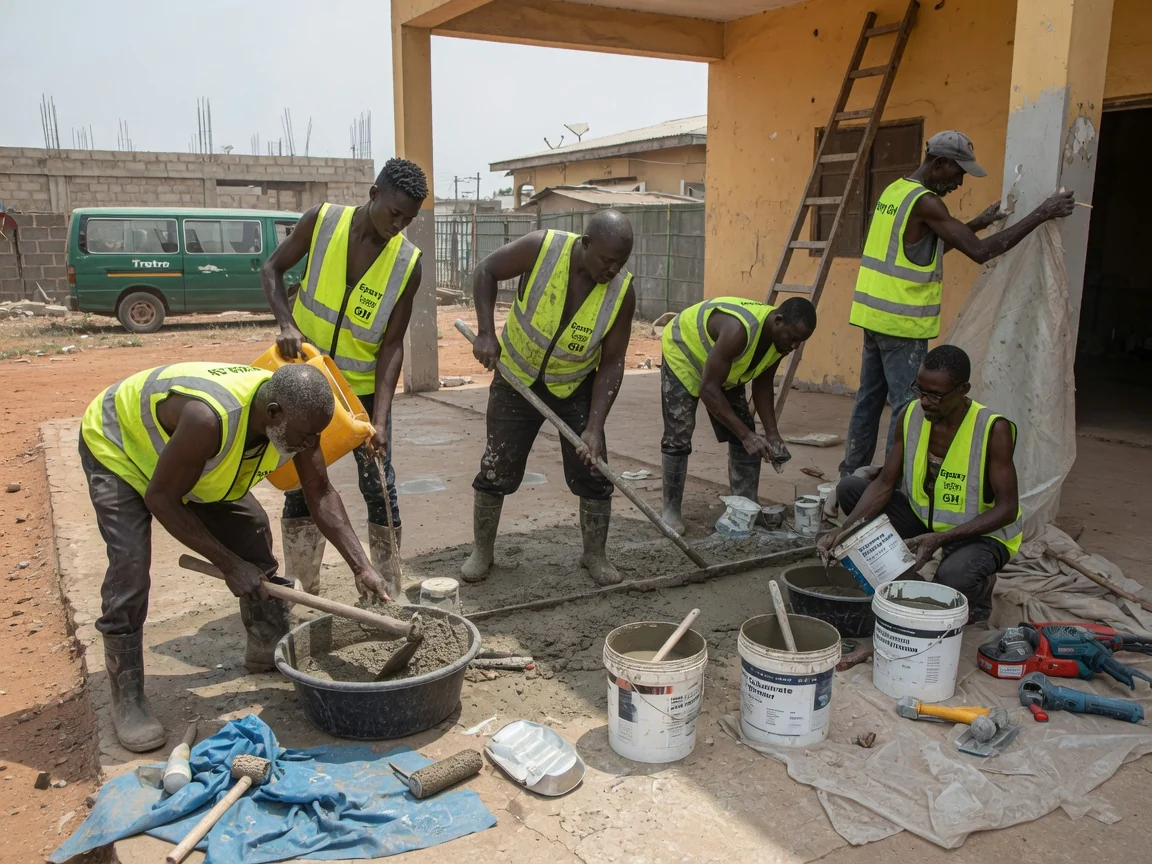
- Concrete repair & crack treatment — defective concrete cut back and reinstated with polymer-modified mortars; cracks and voids filled.
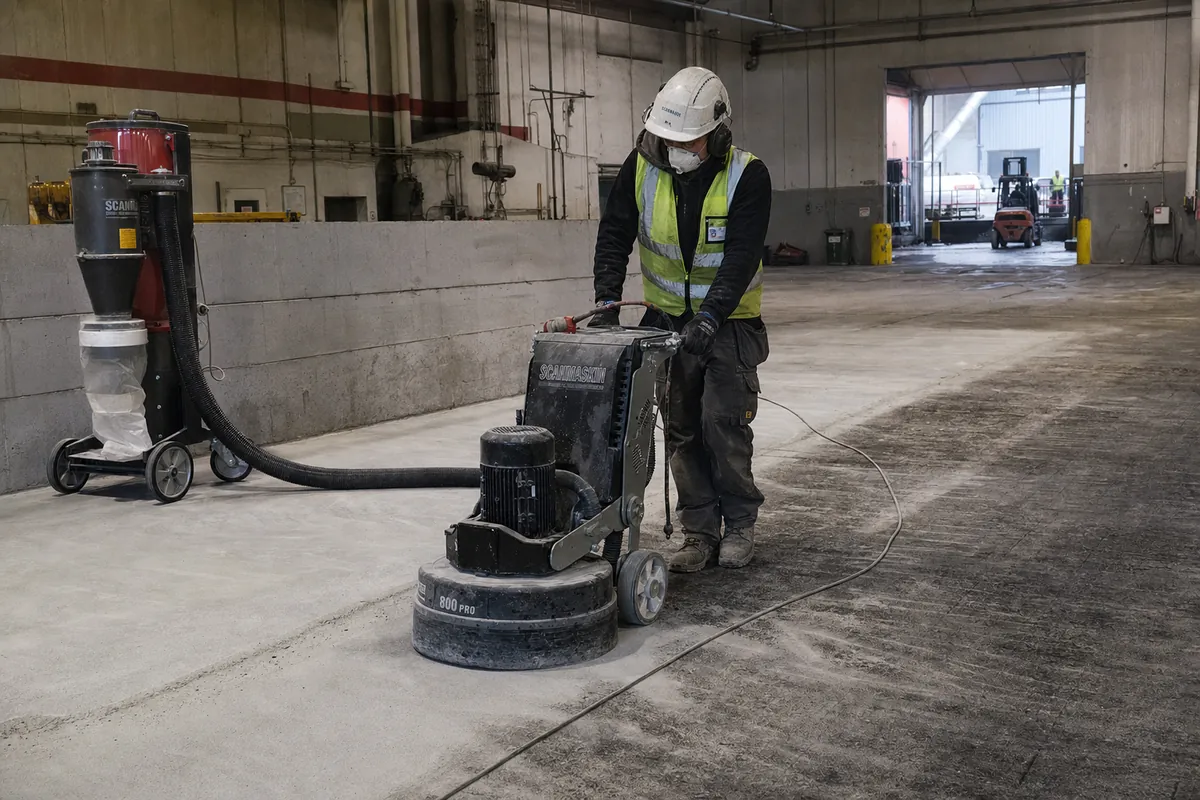
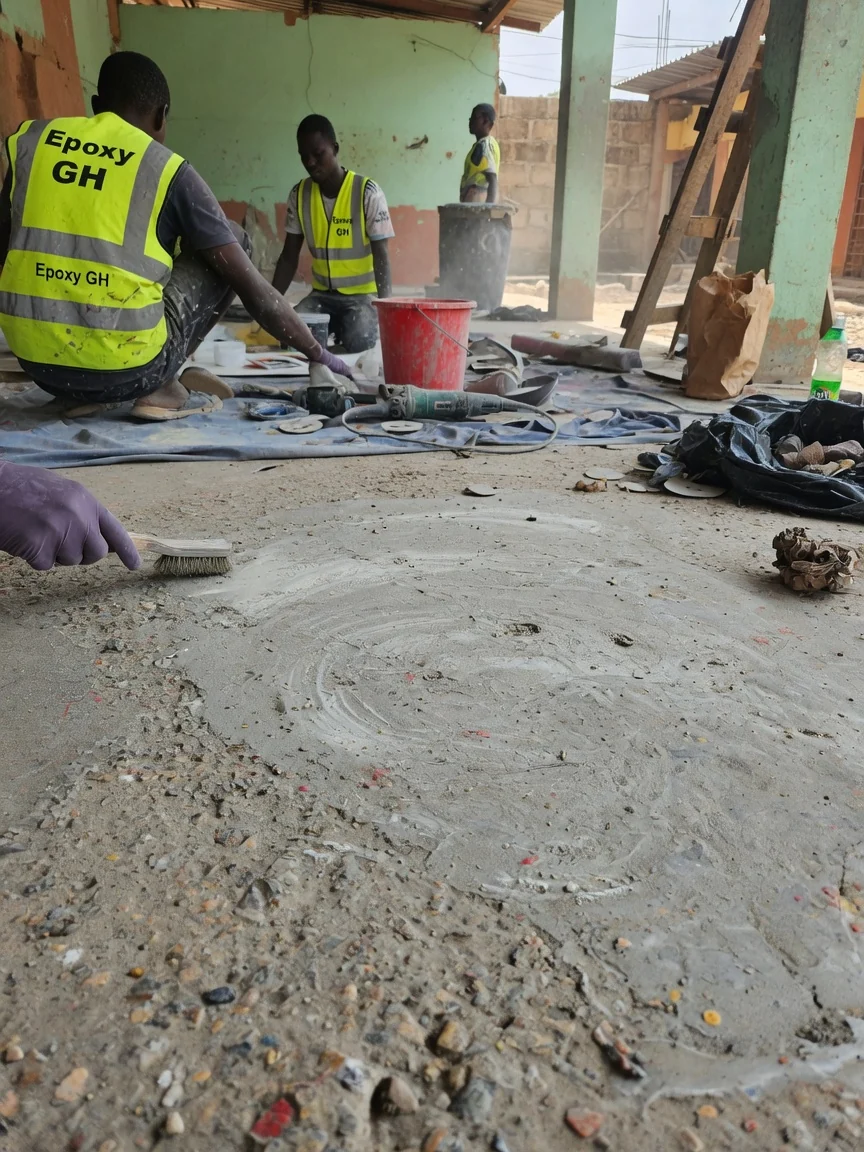
- Profiling to ICRI CSP — diamond grinding / shot-blasting / scarifying to the specified CSP (typically CSP 3–6 for epoxy).
- Moisture suppression & priming — moisture-tolerant or vapour-suppression primer to the reading at metered spread rates.
- Verification & record — adhesion (ASTM D3359) verified; CSP, moisture and batch records compiled into the substrate-preparation record.
What Affects the Cost
- Slab condition and the extent of concrete repair, crack treatment and laitance removal required
- The moisture remediation the ASTM F2170/F1869 readings call for (primer type and spread rate)
- The ICRI CSP profile specified and the preparation method (grinding, shot-blasting, scarifying)
- Area (m²), access, and whether the facility stays operational during works
We discuss every one of these drivers with you openly, and every quote follows a site survey and slab moisture test — no fixed rate is given before the slab is tested.
Applications Across Southern Ghana
- New-build slab handover verification across Accra, Spintex and Tema
- Renovation and recoat preparation on failing or contaminated floors
- Crack, dusting and laitance remediation before showroom, garage and industrial coatings
- Slab preparation for projects across the Tema and Takoradi corridors
Areas We Serve
Epoxy GH prepares concrete slabs across Accra, Spintex, Tema and Greater Accra — plus Kumasi and Takoradi.
Related Services
- Industrial Epoxy Coatings — specification-grade systems built on a prepared slab
- Hygienic Epoxy — seamless coved systems for food and pharma
- Self-Levelling Epoxy — uniform seamless floors over a profiled base
- Decorative Metallic Epoxy — designed metallic finishes over a moisture-tested slab
Frequently Asked Questions
Why is substrate preparation the most important part of an epoxy floor? Because every coating is ultimately an adhesion problem, and adhesion is governed entirely by what lies beneath. A premium resin over an untested, unprepared slab fails; a basic system over a moisture-tested, ICRI-CSP-prepared slab lasts. In Ghana’s 81–83% humidity, the slab — not the resin — decides whether the floor performs for years or peels within months.
How do you test concrete moisture before epoxy? We use the two recognised methods: in-situ relative humidity probes set at 40% slab depth (ASTM F2170), which is the dominant pre-install test, and the calcium-chloride moisture-vapour emission rate (ASTM F1869) for surface vapour load. The readings determine whether the slab is ready, needs a vapour-suppression primer, or needs further remediation — we never coat a slab we haven’t measured.
What is ICRI CSP and why not ISO 8501? ICRI CSP is the Concrete Surface Profile scale from the International Concrete Repair Institute — the correct reference for the roughness a concrete slab needs before a resin coating. ISO 8501 is a steel-prep standard (rust and Sa grades) and does not apply to concrete. We profile slabs to a specified CSP, typically CSP 3–6 for epoxy systems, not to a steel standard.
How much does substrate preparation cost? It is quoted on survey, with the drivers open: slab condition, the extent of concrete repair and crack treatment, the moisture remediation the readings require, the CSP profile specified, area and access. We discuss each driver with you and never give a fixed rate before testing the slab — request a site survey.