
Hygienic Epoxy (Food & Pharma)
Seamless coved-base epoxy for food and pharma in Accra — wash-down-rated, chemical-resistant systems with HACCP/GMP-aligned hygiene detailing over a moisture-tested (ASTM F2170/F1869), ICRI-CSP-prepared slab. Epoxy GH — quote-first, cost-transparent, since 1981.
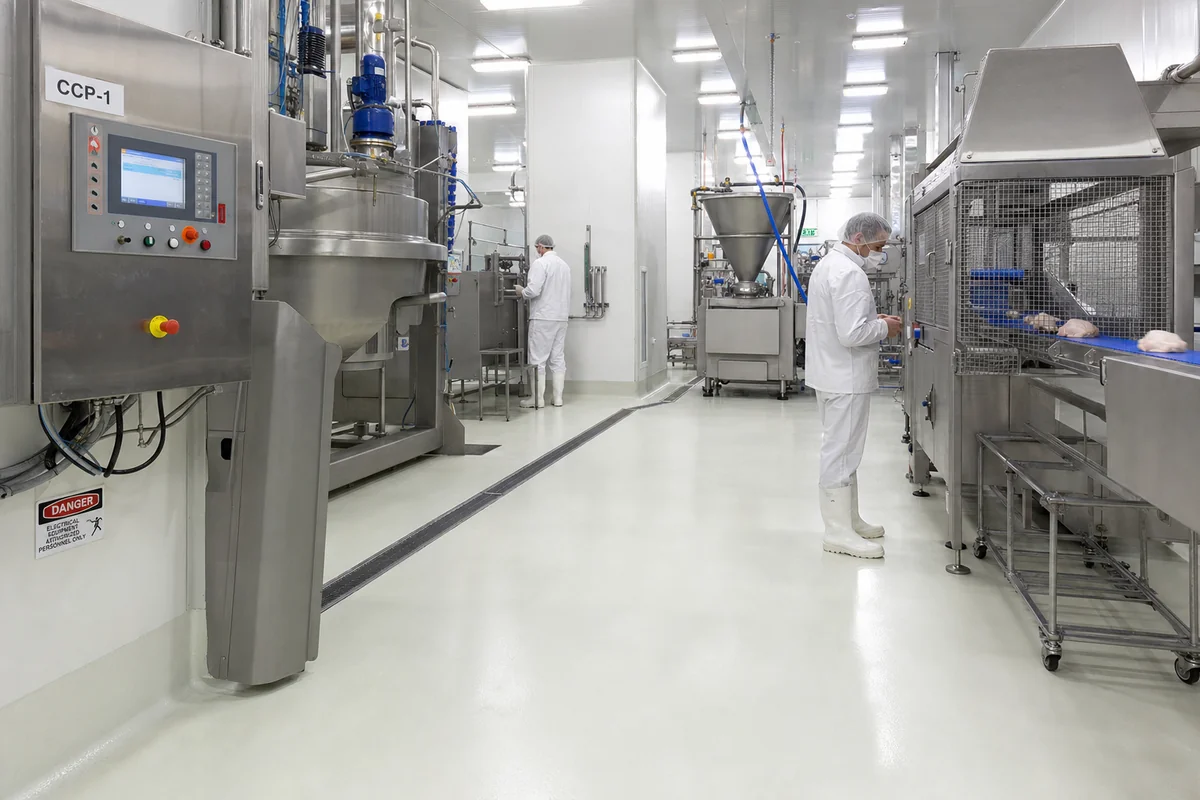
Hygienic epoxy is a seamless, non-porous floor (and wall) coating system for environments where contamination control is a regulatory obligation, not a preference. Its defining detail is the coved base — the wall-to-floor junction formed in the same resin, eliminating the grout shadow gaps where pathogens harbour. The result is a monolithic surface that tolerates repeated chemical wash-down, high-pressure hose-down and CIP thermal shock. In Ghana’s humidity its success is still decided beneath the resin — by slab moisture testing and substrate preparation. Epoxy GH has installed seamless resin floors across Accra since 1981.
A Floor That Holds a HACCP Audit — and the Slab That Holds the Floor
Food and pharma floors fail in two directions at once. From above, daily hose-down, chemical sterilisation and CIP thermal shock attack the surface. From below — and this is the part most installers skip — moisture rising through an untested slab lifts the coating. In Ghana’s persistent 81–83% relative humidity, that vapour builds osmotic and hydrostatic pressure under the resin and disbonds it, turning a wash-down floor into a delaminated contamination risk within months.
We treat moisture as the primary engineering control. Before a drop of resin is mixed we test in-situ relative humidity to ASTM F2170 and moisture-vapour emission to ASTM F1869, and prepare to ICRI CSP — the concrete surface profile scale, not the steel-only ISO 8501. Then we build seamless, with coved bases and a chemical-resistant body (resistance assessed to ASTM C267) sized to the cleaning regime your line actually runs.
Where Hygienic Epoxy Is Required
Food Production & Beverage
Bakeries, beverage plants, dairies and processing halls — wet-process bays, HACCP zones and any food-contact-adjacent surface that a third-party auditor will inspect.
Pharmaceutical & Compounding
GMP corridors, compounding pharmacies, medical-device assembly and laboratory preparation rooms, where surface cleanability is a licence condition.
Cold Stores & Wash-Down Bays
Temperature-cycling and constant-hose-down areas where the cove detail and thermal tolerance keep water out of joints.
Abattoirs & High-Soil Areas
The most aggressive wash-down and chemical regime, where a seamless coved surface is the only finish that survives the cleaning cycle.
The Moisture-Testing Doctrine
| Test | What it measures | Why it decides the floor |
|---|---|---|
| ASTM F2170 | In-situ relative humidity (probes at 40% slab depth) | The dominant pre-install moisture test; a wash-down floor disbonds when the slab beneath it was never tested |
| ASTM F1869 | Calcium-chloride moisture-vapour emission rate | Surface vapour load; flags slabs that need a vapour-suppression primer |
| ICRI CSP | Concrete surface profile after preparation | The mechanical key the resin bonds to — concrete uses ICRI CSP, not the steel-only ISO 8501 |
How We Install a Hygienic Epoxy Floor
- HACCP / GMP review & system selection — chemistry matched to your sterilisation agents; chemical resistance to ASTM C267.
- Slab moisture & substrate testing — ASTM F2170 in-situ RH + ASTM F1869 MVER before anything else.
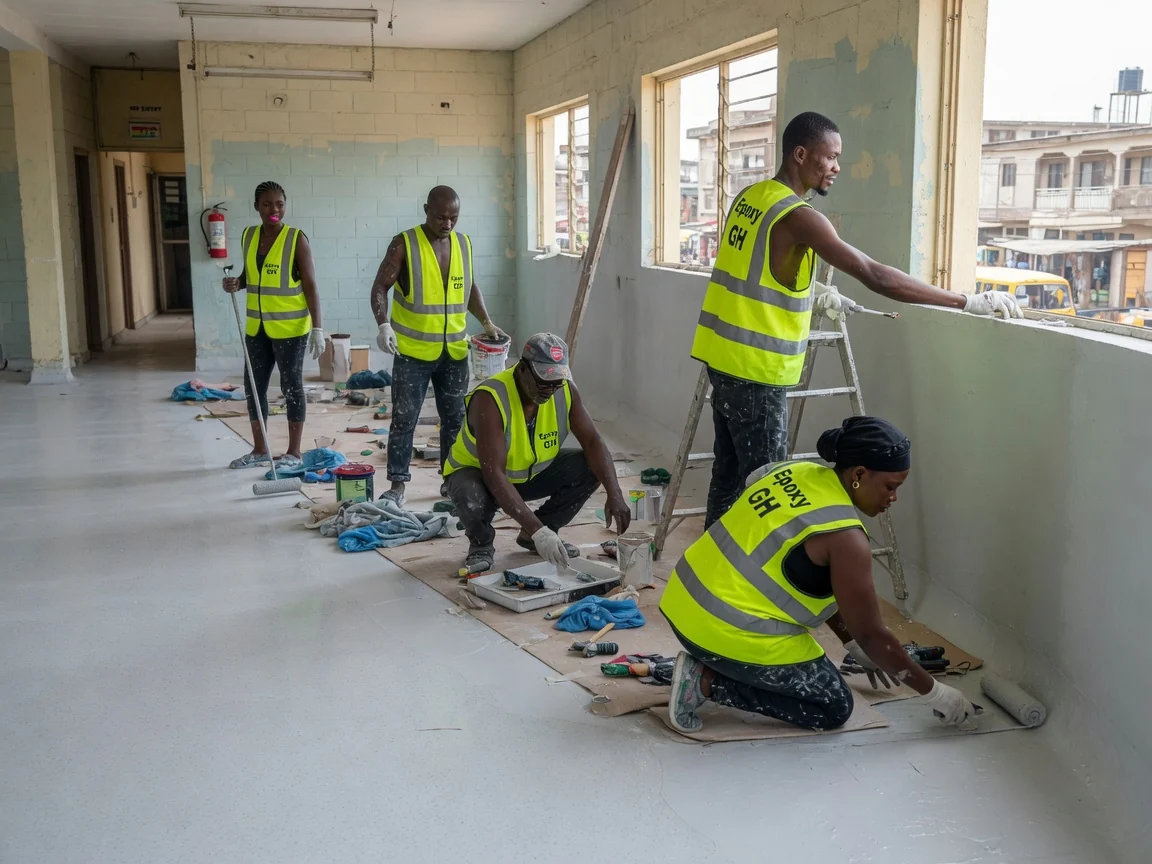
- Surface preparation — diamond grinding / shot-blasting to the specified ICRI CSP; drainage falls and penetrations addressed.
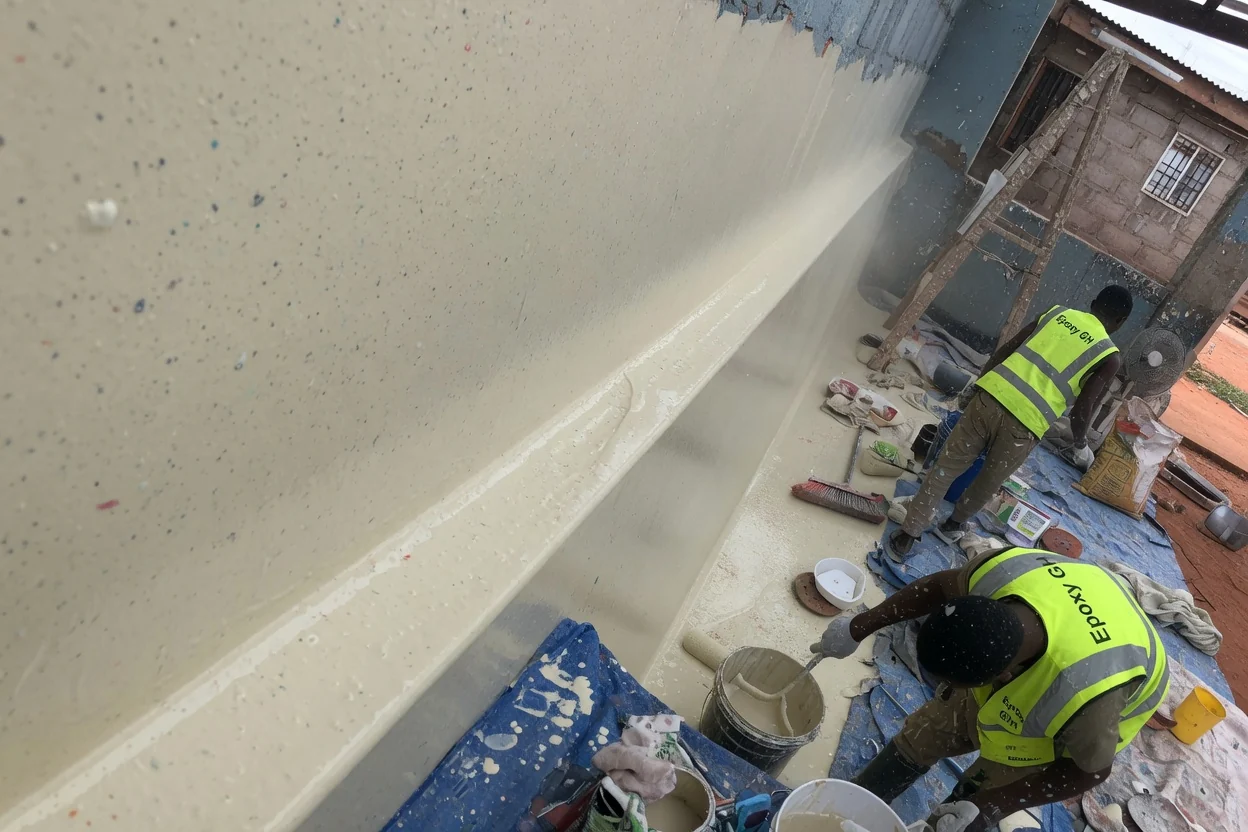
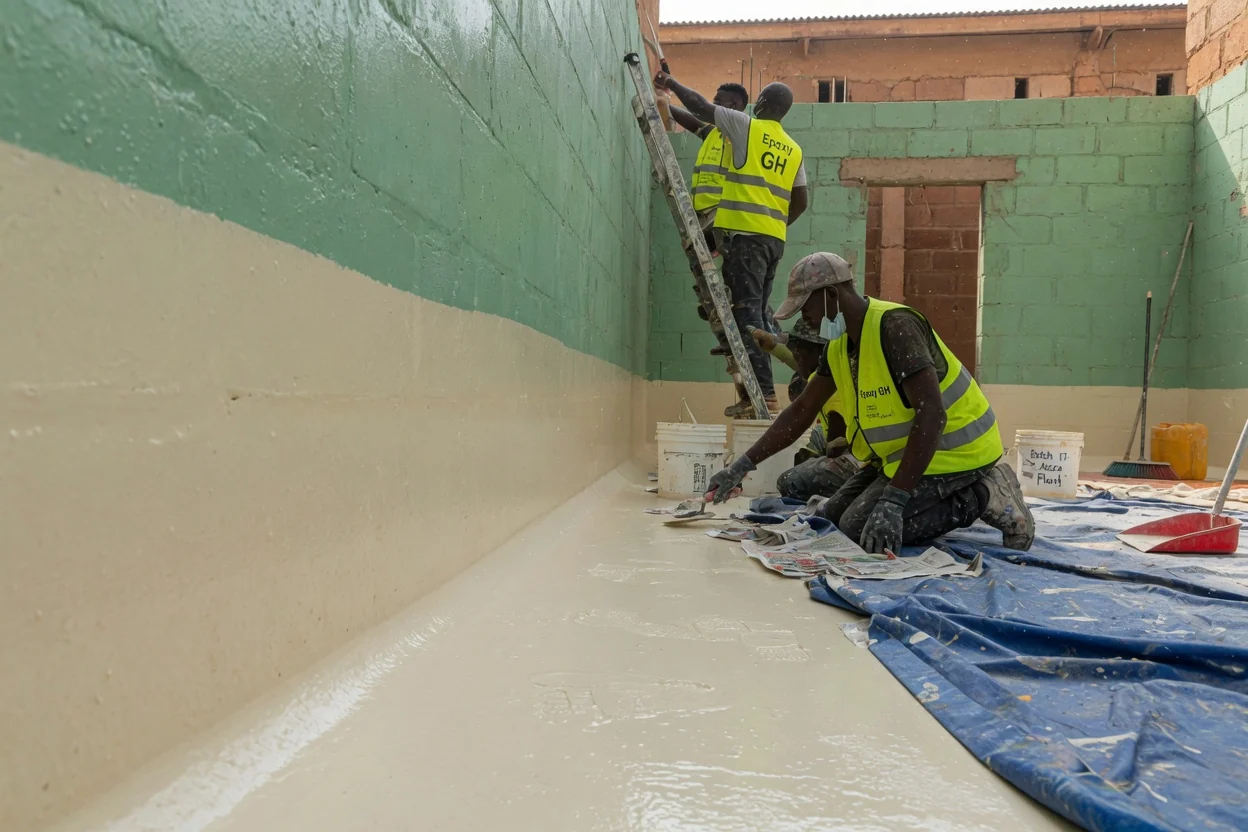
- Seamless build & coved bases — system at specified thickness, coves formed in the same session in the same resin family.
- Anti-slip finish & handover — EN 16165 slip rating where required, adhesion (ASTM D3359) verified, signed completion with photographic record.
Hygienic Systems Compared for Ghana’s Wet-Process Floors
| System | Best for | Key feature | Moisture tolerance |
|---|---|---|---|
| Seamless coved epoxy | Pharma, dry/medium food areas | Monolithic, cleanable, coved | High when slab is tested & primed |
| Anti-slip coved epoxy | Wet-process food, kitchens | EN 16165 slip rating broadcast | High; tested slab essential |
| PU screed (where severe) | Abattoirs, CIP, thermal shock | Tolerates wet/thermal cycling | Highest; thick build |
What Affects the Cost
- The system and build thickness specified, and whether a PU screed is needed for severe thermal/wash-down loading
- Linear metres of coved base and the number of drainage channels and penetrations
- The chemical and sterilisation regime (resistance assessed to ASTM C267) and slip rating (EN 16165)
- Slab condition, moisture remediation, area, access, and whether the facility stays operational
We discuss every one of these drivers with you openly, and every quote follows a site survey and slab moisture test — no fixed rate is given before the slab is tested.
Applications Across Southern Ghana
- Food production, beverage and dairy plants across Accra, Spintex and Tema
- Pharmaceutical manufacturing, compounding pharmacies and laboratory preparation rooms
- Cold stores, wash-down bays and abattoirs
- Food and agro-processing facilities across the Tema and Spintex corridors
Areas We Serve
Epoxy GH installs hygienic coved epoxy across Accra, Spintex, Tema and Greater Accra — plus Kumasi and Takoradi.
Related Services
- Anti-Slip Epoxy — EN 16165 slip ratings for wet-process and kitchen floors
- Substrate Preparation — the ICRI-CSP, moisture-tested foundation under every hygienic floor
- Industrial Epoxy Coatings — specification-grade systems for production and logistics
- Polyurethane Topcoat — UV-stable, chemical-resistant seal for demanding environments
Frequently Asked Questions
What is the best floor for a food or pharma facility in Ghana? A seamless, coved hygienic epoxy (or PU screed where thermal shock and heavy wash-down are severe) over a moisture-tested, ICRI-CSP-prepared slab — with the wall-to-floor junction coved so there are no grout lines for bacteria to harbour, and a slip rating set to EN 16165 for wet areas. The detail that passes a HACCP audit is the seamless cove, not the resin brand.
Does a hygienic epoxy floor meet HACCP and GMP requirements? The floor is detailed to support HACCP and GMP hygiene requirements: a seamless, non-porous surface, integrated coved bases that eliminate the wall-floor harbour point, and chemistry that tolerates your sterilisation agents. We align the build to your documented plan — the floor is one control in your wider HACCP/GMP system, not a certificate in itself.
Why do food-plant epoxy floors fail in Ghana? Almost always slab moisture and constant wet-process loading. In Ghana’s 81–83% humidity, trapped vapour lifts the coating from below while daily hose-down and CIP thermal shock attack it from above. We test the slab to ASTM F2170/F1869 first and specify a wash-down-rated system, which is exactly what most failed plant floors skipped.
How much does a hygienic epoxy floor cost? It is quoted on survey, with the drivers open: system thickness, coving linear metres, the chemical and thermal regime, drainage detailing, area and access. We discuss each driver with you and never give a fixed rate before the slab is tested — request a site survey.