
Polyurethane Topcoat
UV-stable polyurethane and polyaspartic topcoats over epoxy in Accra — non-yellowing, abrasion-resistant seals for sunlit, outdoor-adjacent and high-traffic floors, with adhesion verified to ASTM D3359 over a moisture-tested base. Epoxy GH — quote-first, cost-transparent, since 1981.
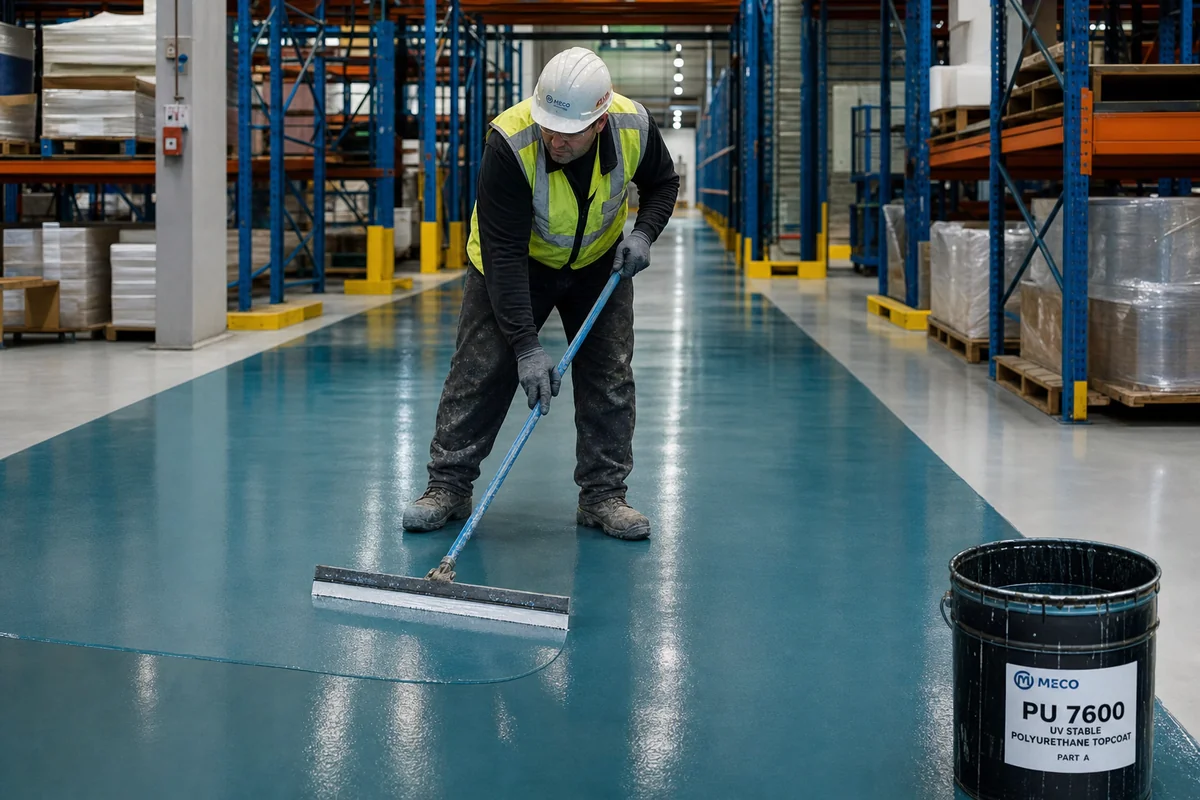
A polyurethane topcoat is a UV-stable, non-yellowing seal applied over a cured epoxy base to deliver the one thing epoxy alone cannot: resistance to sunlight, with added abrasion resistance and colour stability. Where epoxy provides the structural, chemical-resistant body, the topcoat takes the UV, the foot and forklift abrasion, and the decade of wear that would otherwise amber and dull a bare resin floor. In Ghana’s humidity its durability is still decided beneath the resin — by the moisture state of the slab the whole system sits on. Epoxy GH has sealed resin floors across Accra since 1981.
The Layer Epoxy Cannot Do — UV Stability
Bare epoxy is not UV-stable. Under Ghana’s strong sunlight it ambers, chalks and dulls — often within the first year near windows, skylights, roller-shutter openings and covered-but-daylit bays. The structural performance is intact; the appearance fails. A UV-stable aliphatic polyurethane or polyaspartic topcoat arrests that degradation, holding colour and gloss where epoxy alone would yellow.
But a topcoat is only as durable as what it sits on. If the epoxy beneath it is lifting because the slab was never moisture-tested, the topcoat lifts with it. That is why, on new or untested floors, we verify slab moisture to ASTM F2170 and ASTM F1869 before recommending a topcoat — and verify adhesion to ASTM D3359 after. We seal sound systems; we don’t coat over a moisture problem.
Where a Polyurethane Topcoat Earns Its Place
Sunlit & Outdoor-Adjacent Floors
Covered loading bays, semi-open production halls, car-park decks and daylit showrooms where UV ingress would amber a bare epoxy.
High-Traffic & Forklift Areas
Logistics staging, circulation and production floors where abrasion and rolling loads dull and wear an unsealed surface.
Showrooms & Hospitality
Premium retail and hospitality floors where colour must read identically in year one and year eight — and where polyaspartic’s fast return to service minimises downtime.
Chemical & Wash-Down Environments
Food, pharma and processing areas where a chemical-resistant, cleanable seal extends the service life of the epoxy body beneath.
Polyurethane vs Polyaspartic — and the Base Beneath
| Layer | Role | Key property | Note |
|---|---|---|---|
| Aliphatic polyurethane topcoat | UV-stable seal | Non-yellowing, high abrasion, colour-stable | The established high-traffic seal |
| Polyaspartic topcoat | UV-stable seal | Non-yellowing + fast cure / fast return to service | For live facilities that can’t close long |
| Epoxy base | Structural body | Chemical resistance, build, adhesion | Must be sound; moisture-tested if new/unknown |
| Concrete slab | Foundation | Moisture state decides the whole system | ASTM F2170 / F1869 — ICRI CSP, not ISO 8501 |
How We Apply a Polyurethane Topcoat
- Exposure & system selection — UV, traffic, chemical and gloss target define topcoat type and anti-slip (EN 16165).
- Base & moisture verification — sound base confirmed; slab moisture (ASTM F2170/F1869) checked on new/untested floors.
- Surface preparation — abrasion to the datasheet profile so the seal keys mechanically.
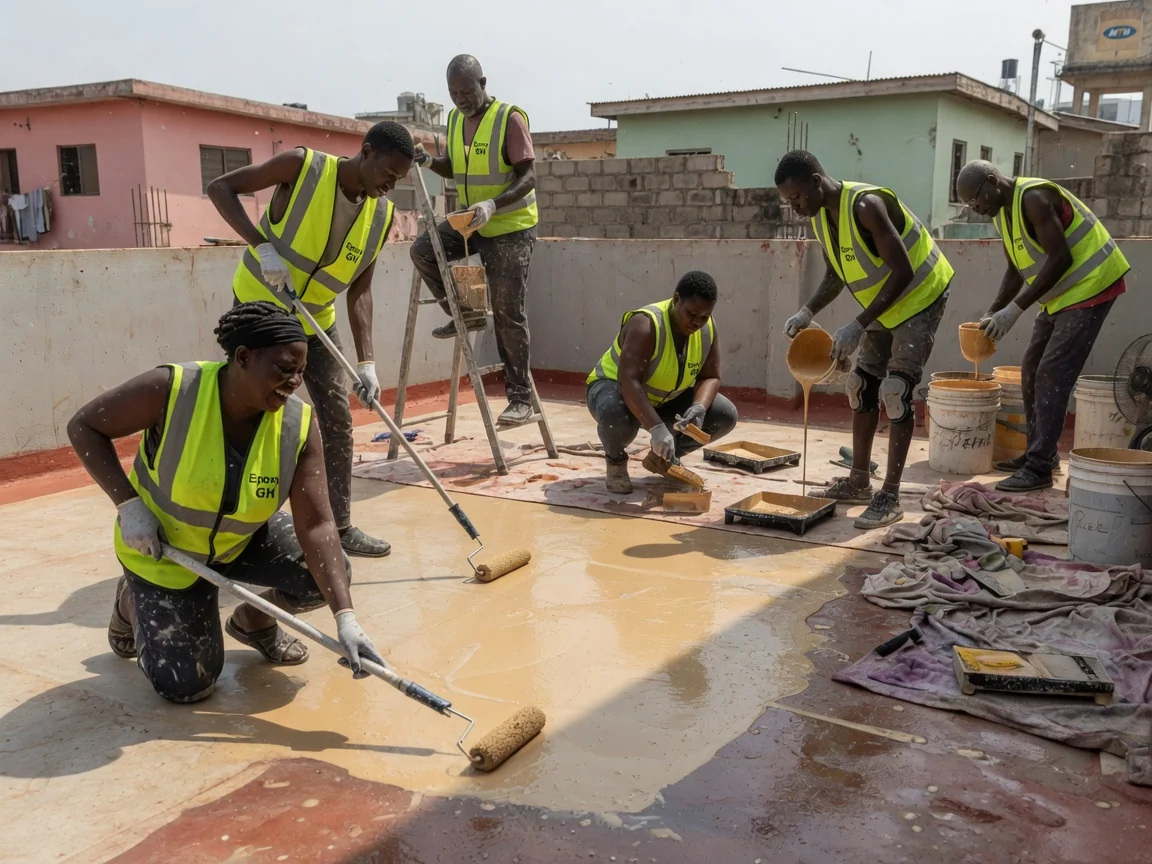
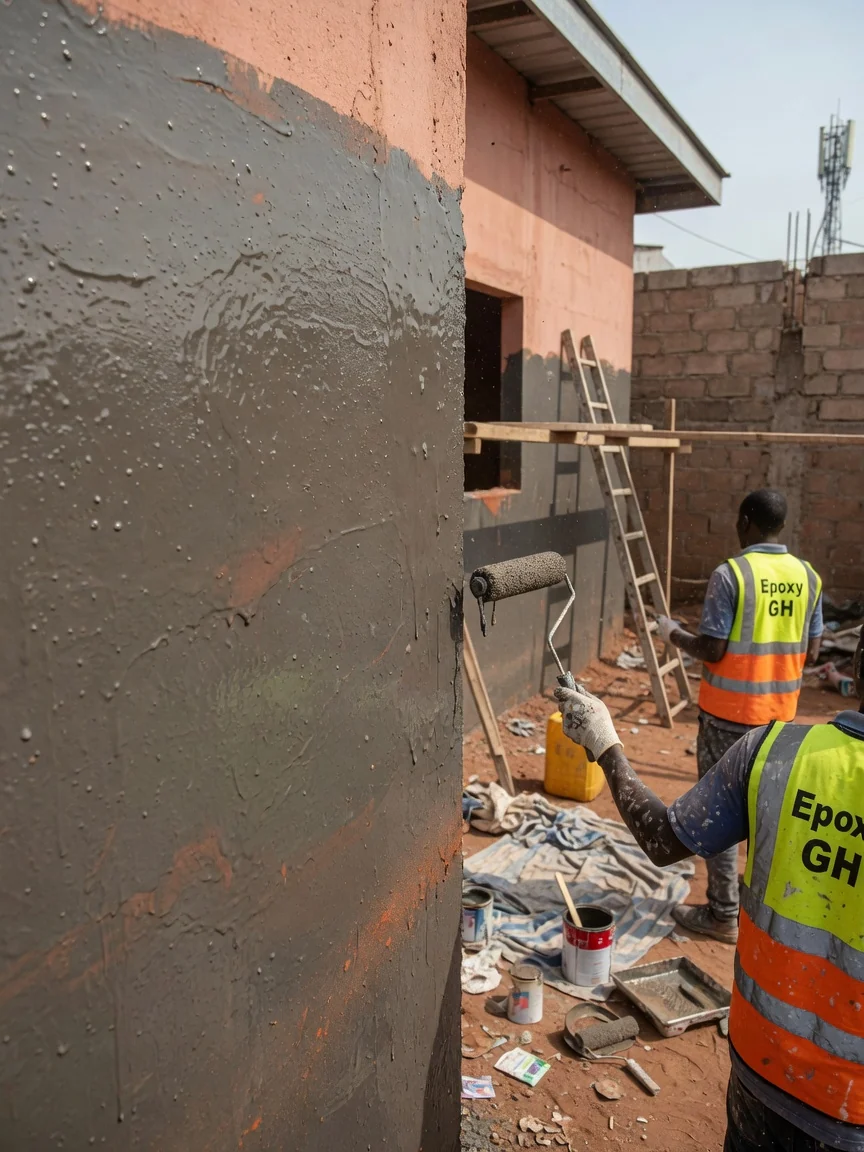
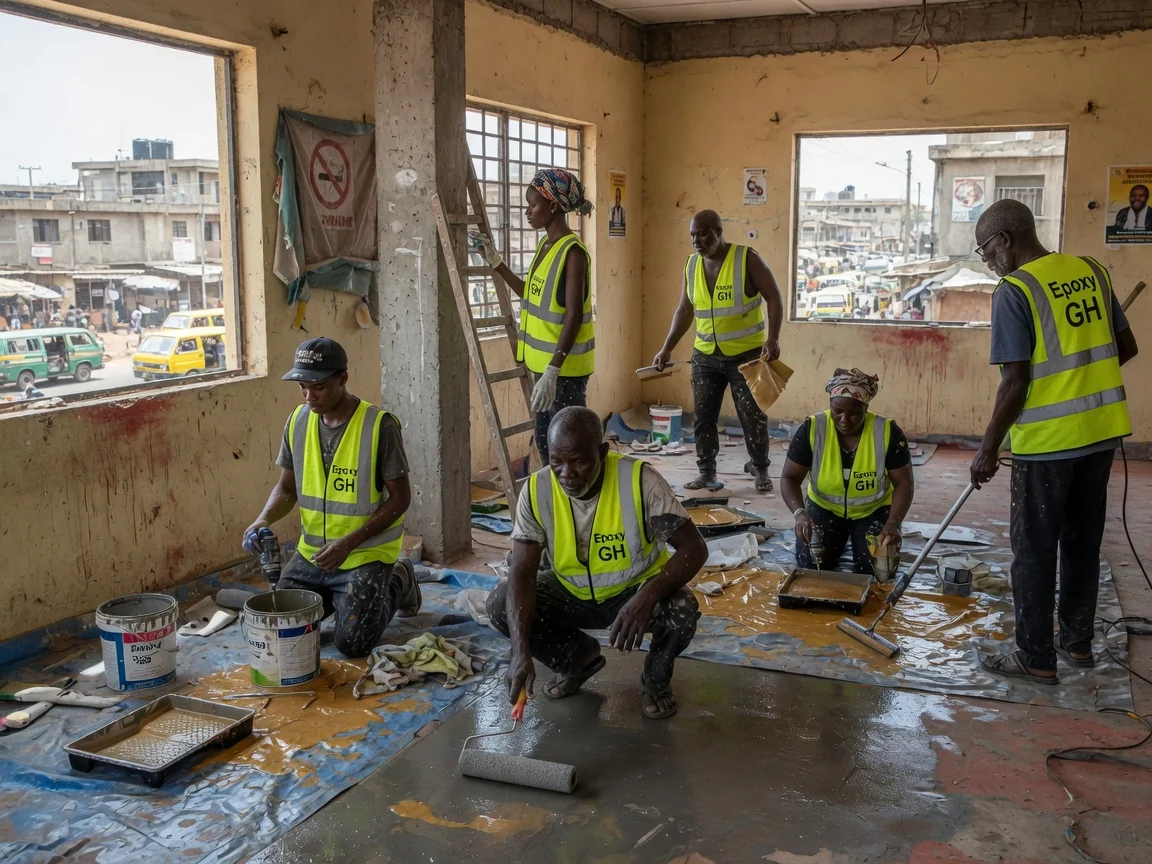
- Topcoat application — wet-film spec, inter-coat windows observed; polyaspartic where fast return matters.
- Verification & handover — dry-film build and adhesion (ASTM D3359) verified, gloss checked, signed completion.
What Affects the Cost
- Topcoat type (aliphatic polyurethane vs polyaspartic) and number of coats
- Gloss level and any anti-slip aggregate (EN 16165) specified
- The condition of the existing epoxy or concrete base and any remediation required
- Area (m²), access, and whether the facility stays operational during works
We discuss every one of these drivers with you openly, and every quote follows a site survey — no fixed rate is given before the floor is inspected.
Applications Across Southern Ghana
- Sunlit showrooms, dealerships and retail floors across Accra, Spintex and East Legon
- Covered loading bays, car-park decks and semi-open production halls
- Logistics, manufacturing and food/pharma floors needing a chemical-resistant, colour-stable seal
- Showroom and industrial floors across the Tema and Takoradi corridors
Areas We Serve
Epoxy GH applies UV-stable topcoats across Accra, Spintex, East Legon and Greater Accra — plus Kumasi and Takoradi.
Related Services
- Industrial Epoxy Coatings — the specification-grade epoxy body beneath every topcoat
- Decorative Metallic Epoxy — metallic floors sealed under a UV-stable topcoat
- Substrate Preparation — the ICRI-CSP, moisture-tested foundation under the whole system
- Self-Levelling Epoxy — seamless base systems ready for a topcoat seal
Frequently Asked Questions
Why does my epoxy floor yellow or chalk near windows? Bare epoxy is not UV-stable — under sunlight it ambers and chalks, often within the first year near windows, skylights and roller-shutter openings. The fix is a UV-stable aliphatic polyurethane or polyaspartic topcoat, which holds colour and gloss where epoxy alone degrades. The epoxy stays as the structural, chemical-resistant body; the topcoat takes the UV and abrasion.
What is the difference between a polyurethane and a polyaspartic topcoat? Both are UV-stable and non-yellowing. Aliphatic polyurethane is the established high-abrasion, colour-stable seal. Polyaspartic is a polyurea-based topcoat that cures faster, allowing a quicker return to service — useful for showrooms and live facilities that cannot close for long. We specify whichever suits your UV, traffic and downtime constraints, and discuss the trade-off on survey.
Can a topcoat be added to an existing epoxy floor? Yes, provided the existing epoxy is sound and well-bonded. We test adhesion and, on older or unknown floors, check the slab moisture (ASTM F2170/F1869) before recommending it — a topcoat over a delaminating base will lift with the base, so we verify the foundation first rather than coat over a problem.
How much does a polyurethane topcoat cost? It is quoted on survey, with the drivers open: topcoat type (polyurethane vs polyaspartic), number of coats, gloss and anti-slip requirement, the condition of the base, area and access. We discuss each driver with you and never give a fixed rate before inspecting the floor — request a site survey.