
ESD Flooring
ESD and static-control epoxy flooring for electronics, pharma and explosive-atmosphere areas across southern Ghana — conductive systems specified to ANSI/ESD S20.20 and IEC 61340 over a moisture-tested, ICRI-CSP-prepared slab, with cost drivers explained openly and every quote on survey. Epoxy GH, since 1981.
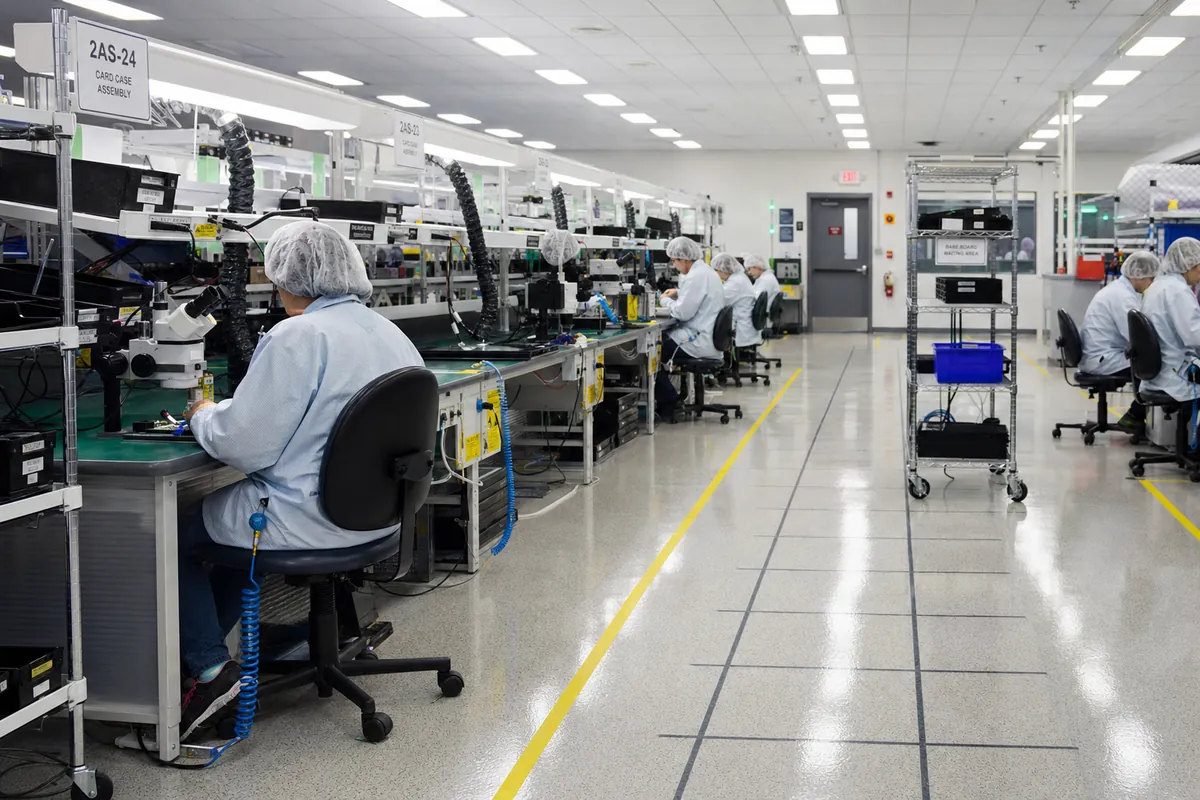
ESD flooring is a conductive or static-dissipative resin system that gives electrostatic charge a controlled, measurable path to ground, protecting sensitive electronics, processes and personnel. It is specified and verified to ANSI/ESD S20.20 and IEC 61340 — so its electrical performance is auditable, not assumed. In Ghana’s humidity its success is decided beneath the resin, by slab moisture testing and substrate preparation. Epoxy GH has installed ESD and static-control floors across southern Ghana since 1981, and we are upfront about what a floor costs and why.
Why Most Epoxy Floors Fail in Ghana’s Conditions — and How We Prevent It
The resin itself rarely fails; the slab beneath it does. In Ghana’s persistent 81–83% relative humidity, moisture vapour rising through a concrete slab builds osmotic and hydrostatic pressure under the coating and lifts it — blistering and delamination within months, and on an ESD floor that also breaks the conductive path that the whole system exists to provide. It is the single most common epoxy-floor failure in the country, and almost every failed floor skipped one step: slab moisture testing before the resin went down.
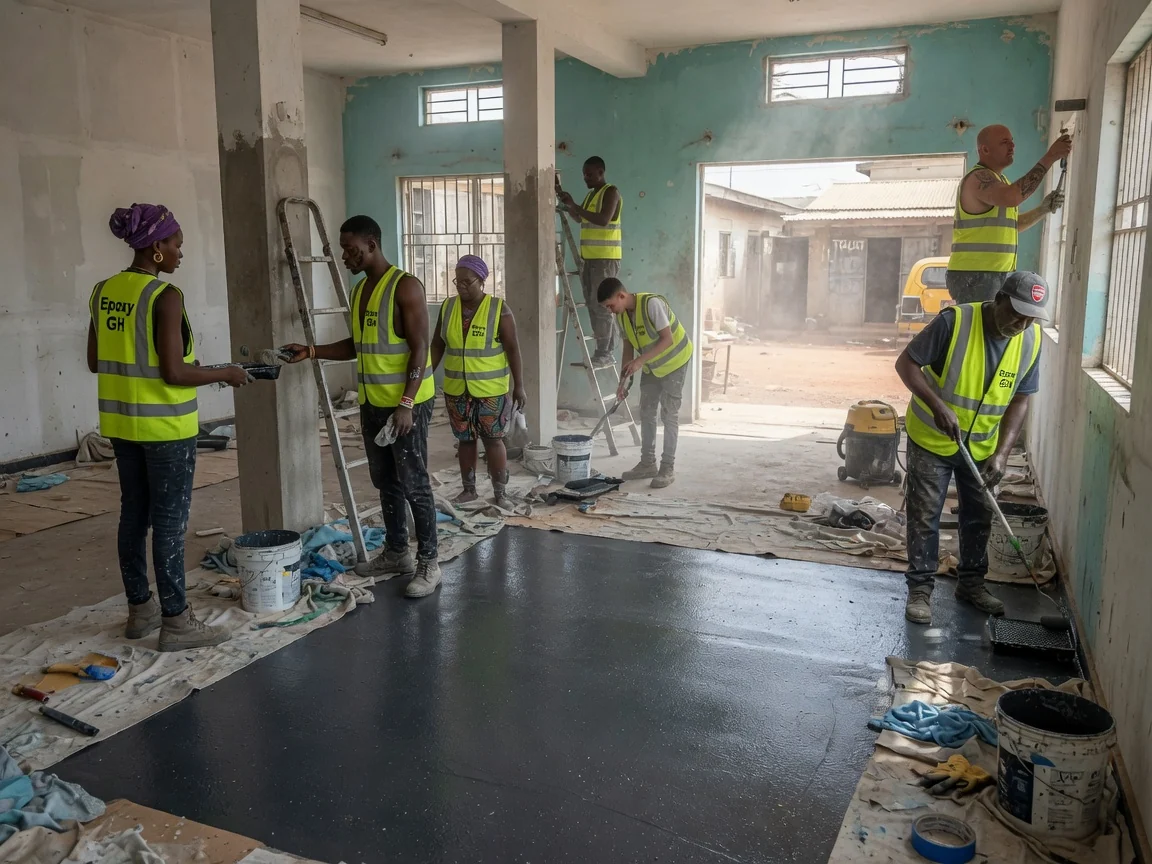
We treat moisture as the primary engineering control. Before a drop of resin is mixed we test in-situ relative humidity to ASTM F2170 and moisture-vapour emission to ASTM F1869, and prime to the reading. That discipline — not the brand of resin — is what keeps an ESD floor bonded and electrically continuous in this climate, and it is also a key variable in what your floor will cost.
ESD & Static-Control Systems We Install Across Southern Ghana
Conductive ESD Epoxy
A low-resistance system giving charge a fast path to ground for electronics assembly, semiconductor handling and EPA (ESD-protected area) floors specified to ANSI/ESD S20.20.
Static-Dissipative Epoxy
A higher-resistance system for areas needing controlled, slower dissipation — defence electronics, data-centre zones and instrument rooms — specified to the IEC 61340 target range.
ESD + Anti-Static for Explosive Atmospheres
Conductive systems for petrochemical, fuel-handling and explosive-atmosphere areas, where uncontrolled static is an ignition risk as well as an equipment risk.
Cleanroom-Compatible ESD
A static-control floor specified alongside cleanroom requirements for pharmaceutical and semiconductor environments needing both static and contamination control.
Standards & the Moisture-Testing Doctrine
| Standard / test | What it covers | Why it matters here |
|---|---|---|
| ANSI/ESD S20.20 | Static-control programme for electronics environments | The programme standard the floor is specified into; sets the target resistance and earthing requirements |
| IEC 61340 | Floor and footwear resistance and test methods | The electrical performance requirements and how resistance-to-ground is measured and verified |
| ASTM F2170 | In-situ relative humidity (probes at 40% slab depth) | The dominant pre-install moisture test; the system and primer are chosen to this reading |
| ASTM F1869 | Calcium-chloride moisture-vapour emission rate | Surface vapour load; flags slabs that need a vapour-suppression primer |
| ICRI CSP | Concrete surface profile after preparation | The mechanical key the resin bonds to — concrete uses ICRI CSP, not the steel-only ISO 8501 |
| ASTM D3359 | Coating adhesion (crosshatch tape test) | Confirms the bond beneath the conductive system at verification |
How We Install an ESD Epoxy Floor
- Slab moisture, substrate & resistance assessment — ASTM F2170 in-situ RH + ASTM F1869 MVER, plus the ANSI/ESD S20.20 / IEC 61340 target, before anything else.
- Surface preparation — diamond grinding / shot-blasting to the specified ICRI CSP; cracks and voids filled.
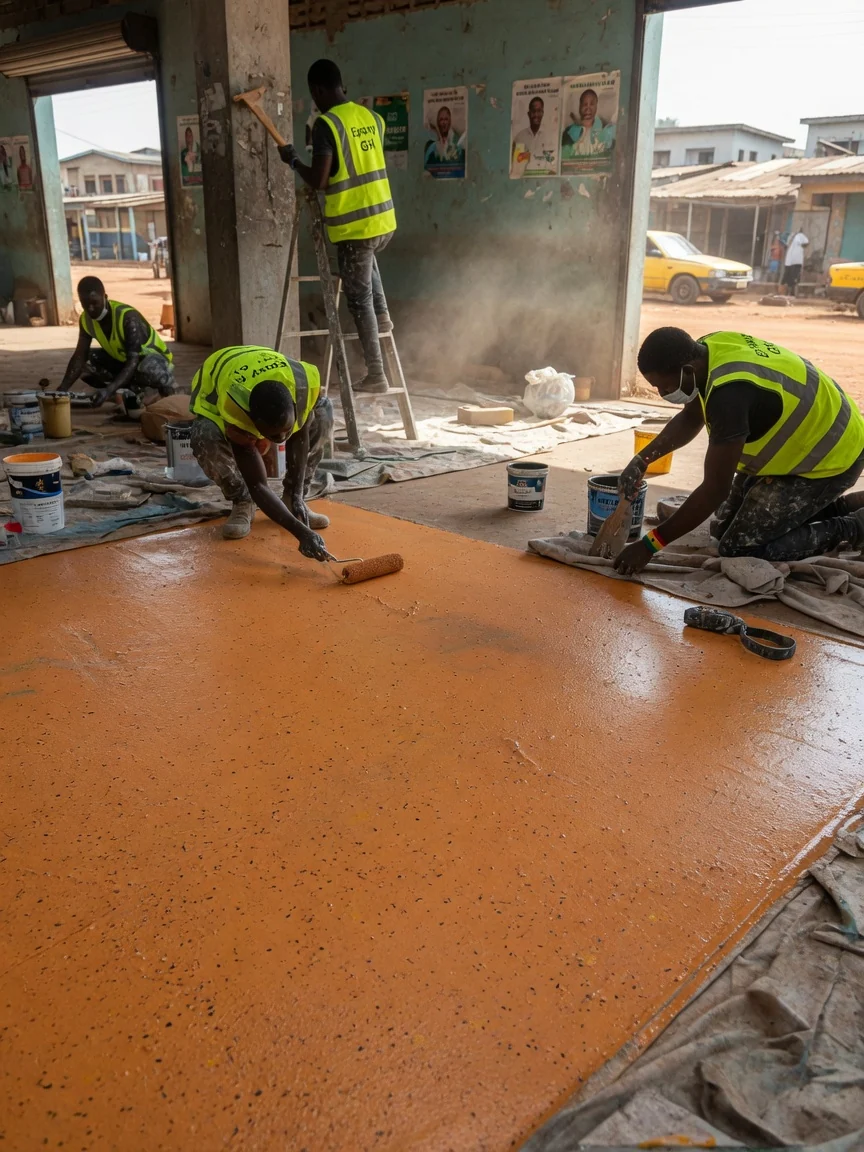
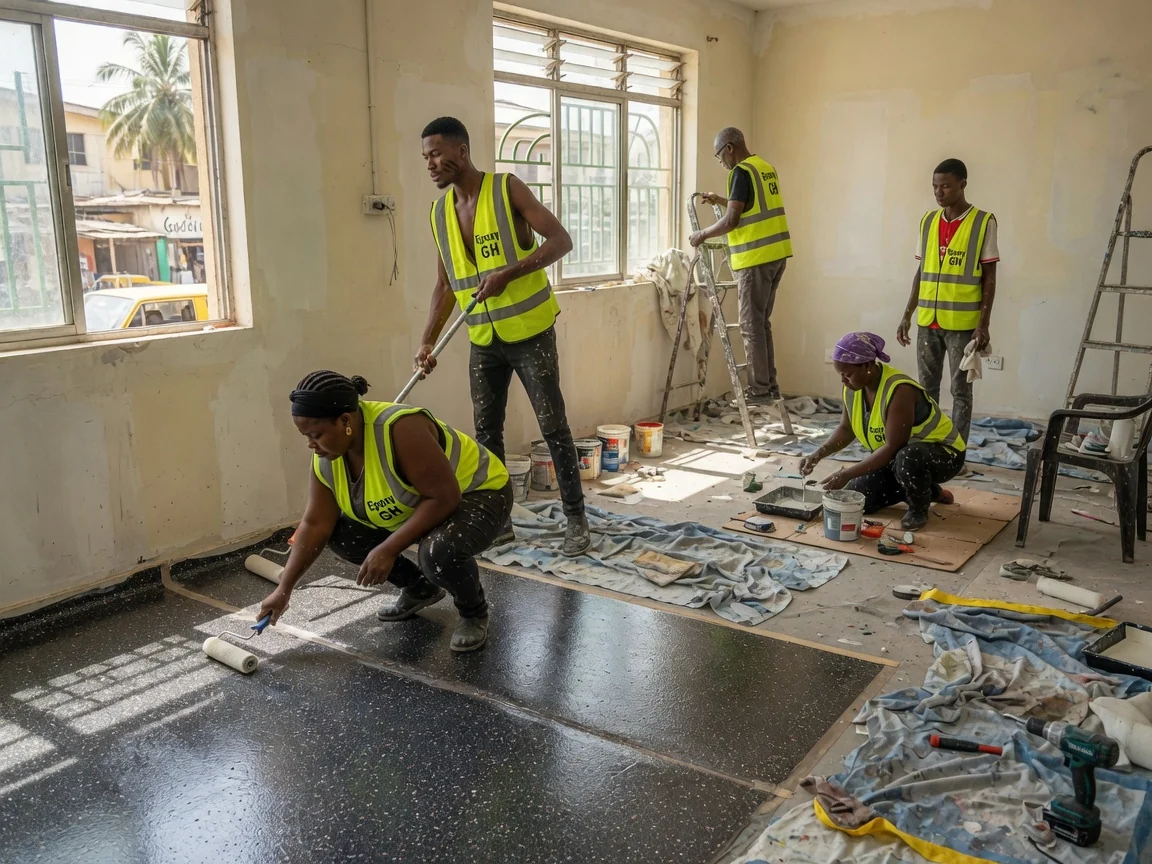
- Conductive primer, earthing grid & ESD topcoat — moisture-tolerant conductive primer to the reading, copper grid bonded to protective earth, conductive or dissipative topcoat at the specified build.
- Resistance verification & handover — resistance-to-ground measured across a grid to ANSI/ESD S20.20 / IEC 61340, adhesion (ASTM D3359), signed electrical test record.
Comparing ESD Systems for Ghana’s Climate
| System | Best for | Standard | Moisture tolerance |
|---|---|---|---|
| Conductive ESD epoxy | Electronics assembly, semiconductor, EPA floors | ANSI/ESD S20.20 | High when slab is tested & primed |
| Static-dissipative epoxy | Defence electronics, data-centre zones, instrument rooms | IEC 61340 | High; choose to the target |
| ESD for explosive atmospheres | Petrochemical, fuel handling, ATEX-zoned areas | ANSI/ESD S20.20 | High; conductive path to earth |
| Cleanroom-compatible ESD | Pharma and semiconductor clean areas | ANSI/ESD S20.20 + IEC 61340 | High; dual static + contamination control |
What Affects the Cost
We quote every floor on survey — but unlike most of the market we explain openly what moves the number, so there are no surprises after the visit:
- The conductive system and earthing grid. An ESD floor carries a conductive primer and a copper earthing grid bonded to protective earth on top of the resin build — that material and the grounding work cost more per m² than a plain coating, and conductive systems differ in price from dissipative ones.
- The target resistance and verification. Tighter ANSI/ESD S20.20 / IEC 61340 targets and a denser resistance-to-ground test grid add specification and QC effort.
- Slab condition and moisture remediation. A slab reading high on ASTM F2170/F1869, or needing crack and void repair, adds a vapour-suppression primer and remedial work — and on an ESD floor moisture also threatens the conductive path, so it is never skipped.
- Area (m²) and access. Larger continuous EPAs are more efficient per m²; small instrument rooms, multiple zones, and out-of-hours working add to it.
Every quote follows a site survey and slab moisture test — we never give a fixed rate before the slab is tested, but we will walk you through each of the drivers above so you can see exactly what you are paying for. Request a quote and we survey first.
Applications Across Southern Ghana
- Electronics assembly and semiconductor handling areas across Accra, Tema and Spintex
- Pharmaceutical and clean manufacturing areas needing static and contamination control
- Defence electronics, data-centre and instrument-room floors
- Petrochemical, fuel-handling and explosive-atmosphere areas
- Facilities across the Tema and Takoradi industrial areas
Areas We Serve
Epoxy GH installs ESD and static-control flooring across Accra, Tema, Spintex and Greater Accra — plus Kumasi and Takoradi, with bilingual English/French support for diaspora owners.
Related Services
- Industrial Epoxy Coatings — high-build systems for warehouses and factories
- Self-Levelling Epoxy — seamless monolithic floors for production areas
- Anti-Slip Epoxy — profiled systems to EN 16165 R-ratings
- Hygienic Epoxy — seamless, coved, wash-down-rated systems
- Polyurethane Topcoat — for thermal shock and aggressive wash-down
- Substrate Preparation — moisture testing and ICRI-CSP prep
Frequently Asked Questions
What standard governs an ESD floor? ANSI/ESD S20.20 is the static-control programme standard for electronics environments, and IEC 61340 sets the floor and footwear resistance requirements and test methods. We specify and verify the floor to the target resistance range your programme calls for, and issue the measured test record at handover.
Why do epoxy floors fail in Ghana? Almost always slab moisture. In Ghana’s 81–83% humidity, trapped vapour under the resin builds osmotic and hydrostatic pressure and lifts it — and for an ESD floor that also breaks the conductive path. The fix is to test in-situ RH (ASTM F2170) and moisture-vapour emission (ASTM F1869) before installation and prime to the reading.
What is the difference between conductive and dissipative ESD flooring? Both control static, but conductive systems give a lower, faster path to ground and dissipative systems a higher, slower one. The right choice is set by your ANSI/ESD S20.20 / IEC 61340 target resistance range and the sensitivity of what you handle — we confirm it on survey.
How much does an ESD floor cost? It is quoted on survey. We talk openly about what drives the cost — the conductive system and copper earthing grid, the target resistance, slab condition and any moisture remediation, area, and access — but we never publish a fixed rate before testing the slab. Request a quote and we survey first.