
Le problème
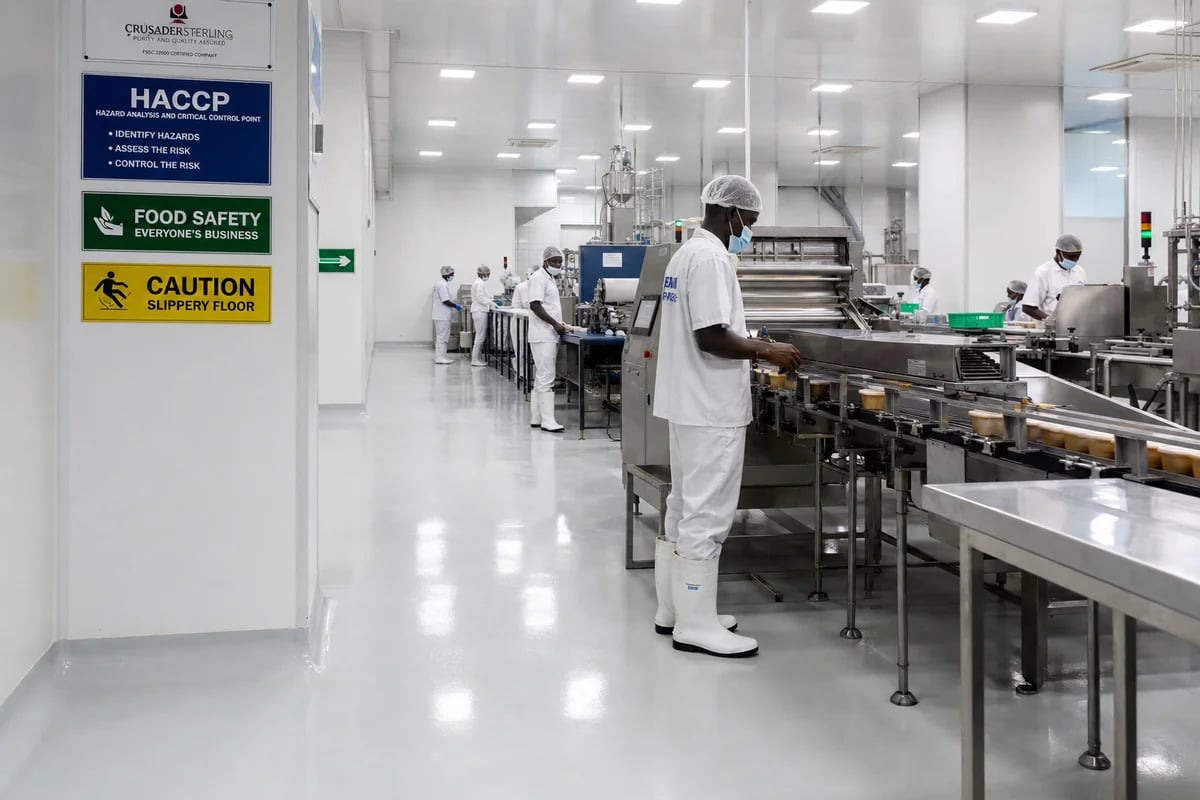
Food production operations under HACCP audit require flooring satisfying FDA food-contact compatibility, integrated coved bases, and antimicrobial spec across wash-down cycles.
Notre approche
Epoxy GH installs FDA-compliant hygienic epoxy systems with seamless coved bases, antimicrobial additives, and full HACCP-aligned QC documentation.
Epoxy GH installs FDA-compliant hygienic epoxy systems with seamless coved bases, antimicrobial additives, and full HACCP-aligned QC documentation.
The Challenge
Food processing and pharmaceutical manufacturing facilities operate under an unforgiving compliance framework. Surfaces that contact food zones, splash areas, and drainage channels must meet FDA hygienic design standards and align with HACCP critical control point documentation — requirements that standard industrial coatings cannot satisfy. A single audit finding tied to a flooring system can halt production, trigger regulatory remediation, and impose direct financial penalties that dwarf the original specification cost.
Ghana’s growing food manufacturing sector — from large-scale poultry and fish processing plants along the Spintex and Tema Industrial corridors to pharmaceutical compounding and packaging facilities across Accra — faces intensifying regulatory scrutiny as export certifications and multinational quality partnerships demand demonstrable hygienic infrastructure. The floor is not peripheral to this compliance posture; it is central. Drainage gradients, coved base junctions, surface porosity, and chemical resistance all sit on auditor checklists alongside equipment calibration and personnel hygiene protocols.
Many facilities inherit screed floors or standard paint-over coatings applied in earlier construction phases when compliance standards were less rigorously enforced. These systems develop micro-cracks, harbour bacterial colonies in floor-wall junctions, and degrade under the thermal cycling of CIP (clean-in-place) wash-down routines and aggressive sanitation chemistry. The cost of deferred specification-grade investment becomes clear only at the point of an export certification visit or a food safety incident.
The Epoxy GH Solution
Epoxy GH delivers FDA-compliant hygienic epoxy flooring systems engineered from the substrate upward for food and pharmaceutical environments. The installation methodology begins with mechanical surface preparation — typically diamond grinding or shot blasting to SSPC-SP 13 standard — to achieve the profile and cleanliness necessary for full adhesion of the primer system. This preparation phase is non-negotiable: no hygienic system performs to specification on a compromised substrate.
The system deployed incorporates seamless, coved base detailing at all floor-wall junctions, eliminating the bacterial harbourage point that is the single most common audit failure in older facilities. Antimicrobial additive packages are integrated into the broadcast layer or topcoat matrix depending on the hygiene zone classification of each area — raw material handling, processing, packaging, and ancillary zones each receive a specification calibrated to their risk profile. All material selections carry the relevant food-safe certifications, and full HACCP-aligned QC documentation is issued on project completion.
Material + System Specification
- Substrate preparation: Mechanical grinding or shot blasting to SSPC-SP 13, moisture testing, and crack repair prior to priming
- Primer system: Solvent-free epoxy penetrating primer, specifically formulated for high-moisture concrete substrates common in Ghanaian industrial construction
- Build coat: High-build solvent-free epoxy at 3–6 mm nominal thickness, slip-resistance aggregate broadcast calibrated to hygiene zone wet-floor requirements
- Antimicrobial topcoat: Seamless, food-safe epoxy finish incorporating silver-ion or zinc pyrithione antimicrobial agents; chemical resistance rated for peracetic acid, sodium hypochlorite, and phosphoric acid CIP chemistry
- Coved skirting system: Factory-radius coved base installed at all floor-wall junctions to a minimum 50 mm radius, eliminating right-angle harbourage zones
- QC documentation package: Material data sheets, batch certificates, independent adhesion pull-off test records, and HACCP-format floor zone compliance documentation
Typical Project Profile
A standard food processing facility engagement covers between 600 m² and 4,000 m² of production floor, with phased installation sequenced around operational shutdowns to minimise production downtime. Sectors served include poultry and seafood processing, beverage bottling, dairy processing, pharmaceutical manufacturing, and food packaging operations. Full system cure and handover typically complete within 10 to 21 working days depending on zone complexity and ambient cure conditions.
Outcomes
- Seamless, coved floor systems that satisfy FDA hygienic design requirements and HACCP critical control point documentation standards
- Elimination of bacterial harbourage points at floor-wall junctions across all food-contact and splash zones
- Demonstrable chemical resistance to standard CIP sanitation chemistry, extending system service life under heavy wash-down routines
- Audit-ready QC documentation package issued at project completion, directly supporting export certification and third-party food safety audits
- Reduction in maintenance and remediation costs versus legacy painted or screed floor systems lacking specification-grade chemical resistance