
Époxy Antidérapant
Sol époxy antidérapant pour cuisines, zones humides, rampes et zones de procédé dans le sud du Ghana — systèmes à charge d'agrégats spécifiés aux classements R9-R13 selon EN 16165 sur une dalle testée pour l'humidité et préparée au profil ICRI CSP, avec les facteurs de coût expliqués ouvertement et chaque devis établi après visite. Epoxy GH, depuis 1981.
L’époxy antidérapant est un sol en résine dans lequel un agrégat calibré est saupoudré pour offrir une résistance au glissement mesurable sur les surfaces humides, grasses et à fort trafic. Sa performance antidérapante est spécifiée à un classement R cible selon EN 16165 — la norme actuelle par la méthode de la rampe — afin que la sécurité soit documentée, et non supposée. Dans l’humidité du Ghana, sa réussite se joue sous la résine, par le test d’humidité de la dalle et la préparation du support. Epoxy GH pose des sols antidérapants dans le sud du Ghana depuis 1981, et nous sommes transparents sur ce que coûte un sol et pourquoi.
Pourquoi la plupart des sols époxy échouent dans les conditions du Ghana — et comment nous l’évitons
Ce n’est presque jamais la résine qui cède ; c’est la dalle en dessous. Dans l’humidité relative persistante de 81 à 83 % de la région, la vapeur d’eau qui remonte à travers une dalle de béton développe une pression osmotique et hydrostatique sous le revêtement et le soulève — cloquage, délamination et décollement en quelques mois, emportant l’agrégat antidérapant avec lui. C’est l’échec de sol époxy le plus courant, et presque tous les sols défaillants ont sauté une étape : le test d’humidité de la dalle avant la pose de la résine.
Nous traitons l’humidité comme le contrôle d’ingénierie primaire. Avant qu’une goutte de résine ne soit mélangée, nous mesurons l’humidité relative in situ selon ASTM F2170 et l’émission de vapeur d’eau selon ASTM F1869, et nous appliquons le primaire selon le relevé. Cette discipline — et non la marque de la résine — est ce qui maintient un sol antidérapant et son profil intacts sous ce climat, et c’est aussi une variable clé de ce que votre sol coûtera.
Les systèmes antidérapants que nous posons dans le sud du Ghana
Antidérapant à saupoudrage fin (R9 à R10)
Une surface légèrement texturée pour les showrooms, bureaux et circulations sèches qui exigent une sécurité au sol sans profil agressif.
Antidérapant à saupoudrage moyen (R11)
Un saupoudrage de quartz ou d’oxyde d’aluminium profilé pour les circulations susceptibles d’être humides, les sanitaires et les rampes où l’eau est occasionnelle.
Antidérapant à saupoudrage lourd (R12 à R13)
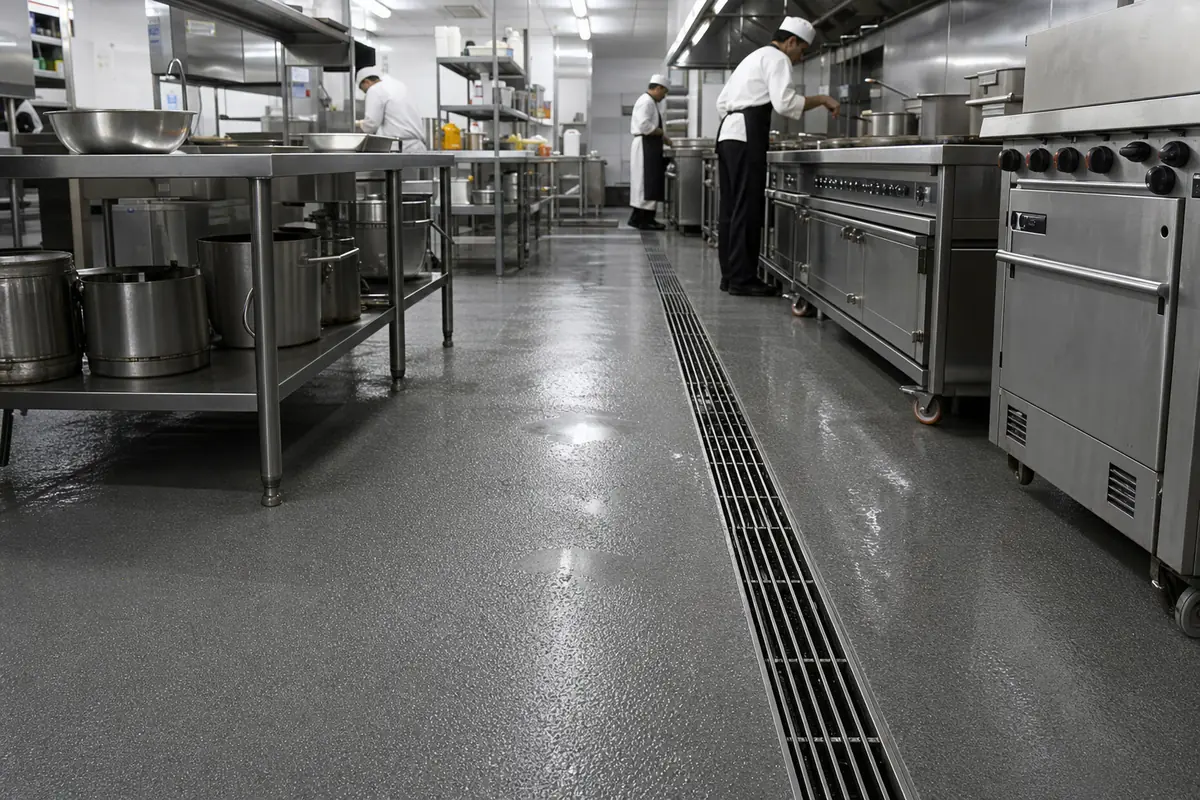
Un saupoudrage grossier de carbure de silicium ou de quartz calibré pour les cuisines professionnelles, les zones de procédé humide et les rampes raides où eau, huiles et produits chimiques sont continus.
Antidérapant + résistant aux produits chimiques
Le saupoudrage d’agrégat porté dans une résine résistante aux produits chimiques pour les zones de procédé et techniques où les déversements sont à la fois agressifs et glissants.
Normes et doctrine du test d’humidité
| Norme / test | Ce qu’elle couvre | Pourquoi c’est important ici |
|---|---|---|
| EN 16165 (Annexe B) | Classement antidérapant par méthode de la rampe, R9 à R13 | La norme antidérapante actuelle ; elle remplace l’ancienne DIN 51130 et fixe la cible à laquelle nous saupoudrons l’agrégat |
| ASTM F2170 | Humidité relative in situ (sondes à 40 % de la profondeur de la dalle) | Le test d’humidité dominant avant pose ; le système et le primaire sont choisis selon ce relevé |
| ASTM F1869 | Taux d’émission de vapeur d’eau au chlorure de calcium | Charge de vapeur en surface ; signale les dalles nécessitant un primaire de suppression de vapeur |
| ICRI CSP | Profil de surface du béton après préparation | L’ancrage mécanique auquel la résine adhère — le béton utilise l’ICRI CSP, et non l’ISO 8501 réservé à l’acier |
Comment nous posons un sol époxy antidérapant
- Test d’humidité de la dalle, du support et de la cible antidérapante — humidité relative in situ ASTM F2170 + émission de vapeur ASTM F1869, ainsi que la cible de classement R EN 16165, avant toute chose.
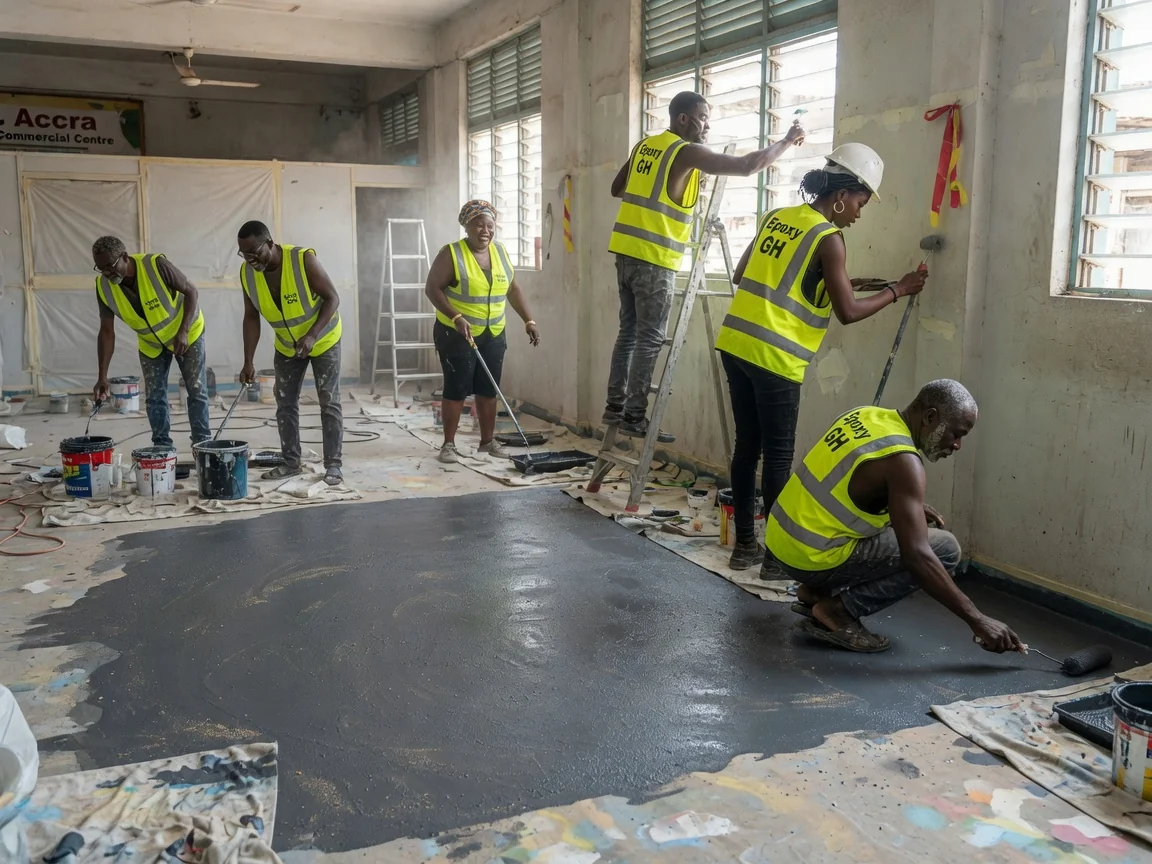
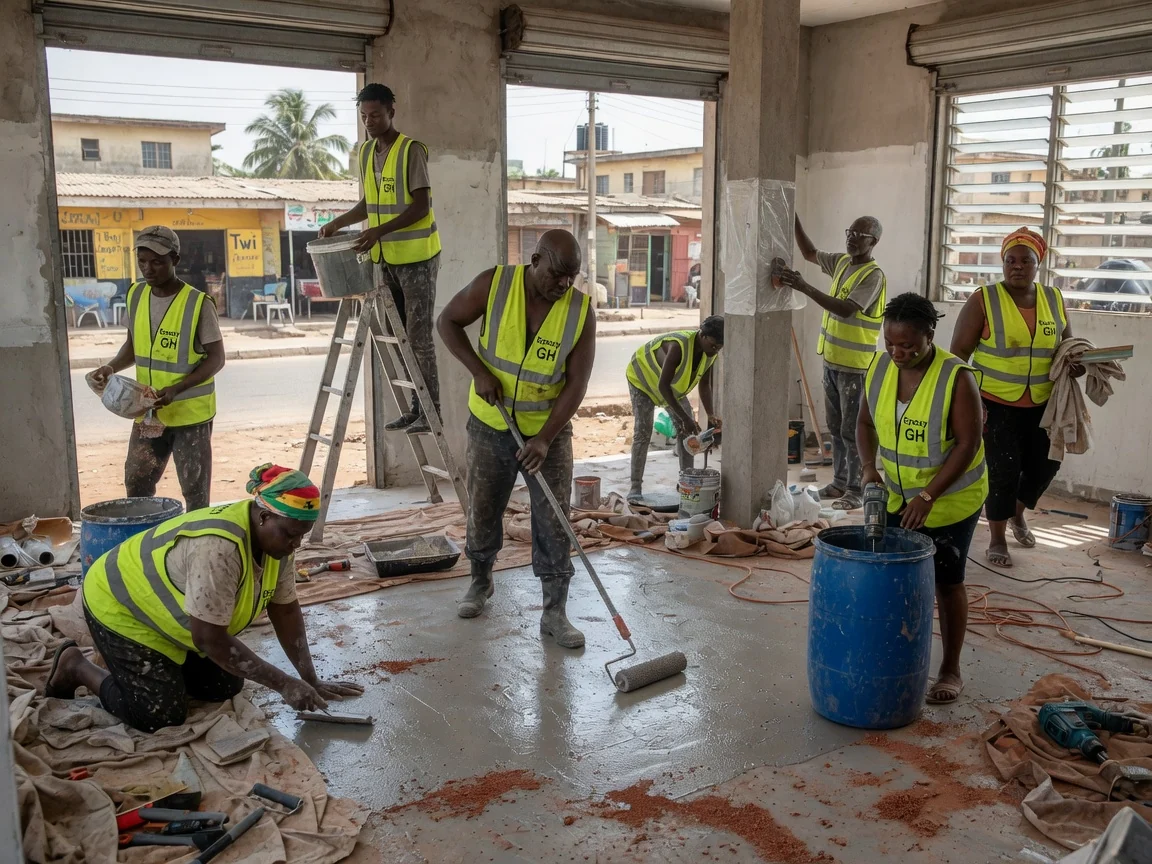
- Préparation de surface — ponçage diamant / grenaillage au profil ICRI CSP spécifié ; fissures et nids de poule comblés.
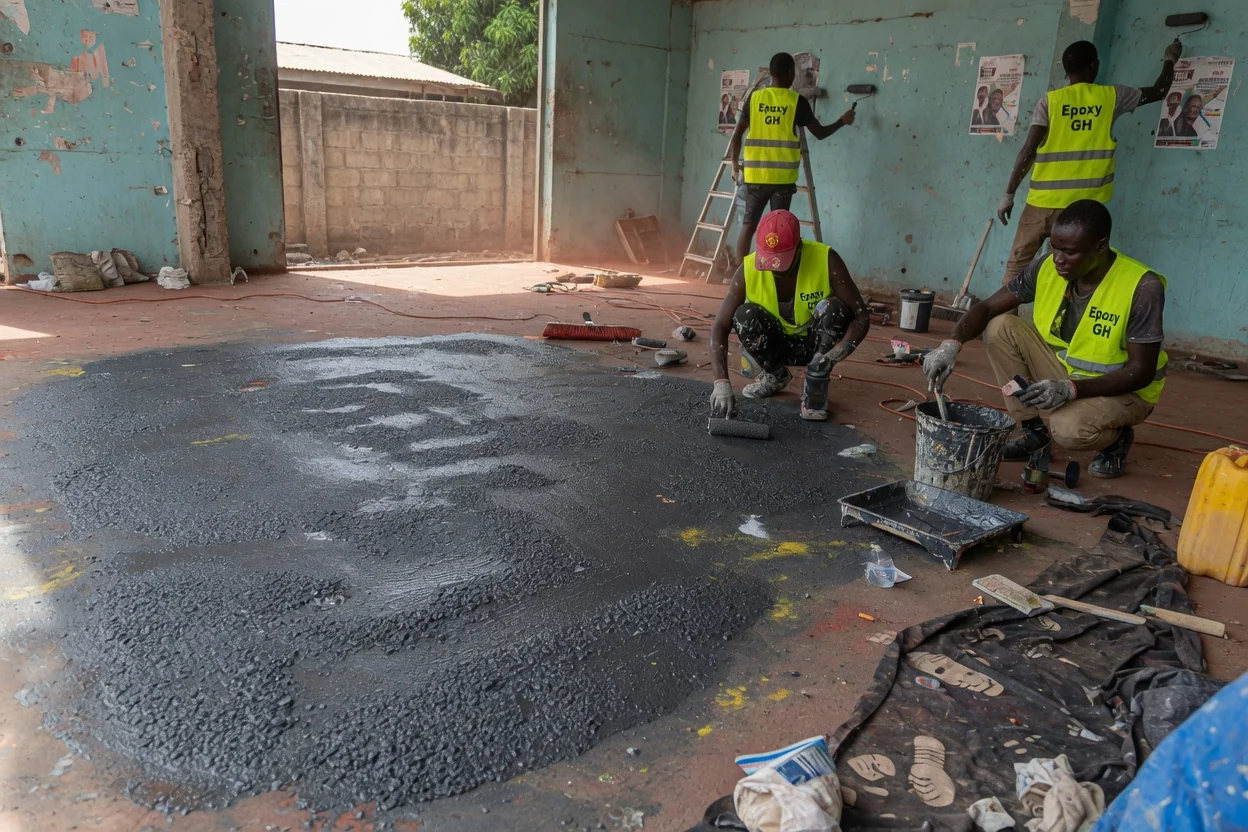
- Primaire, saupoudrage et scellement — primaire tolérant à l’humidité selon le relevé, agrégat saupoudré au classement R cible, scellé sans noyer le profil.
- Vérification et réception — texture de surface vérifiée selon EN 16165, adhérence (ASTM D3359), rapport qualité signé.
Comparaison des montages antidérapants pour le climat du Ghana
| Système | Idéal pour | Cible EN 16165 | Tolérance à l’humidité |
|---|---|---|---|
| Saupoudrage fin | Showrooms, bureaux, circulation sèche | R9 à R10 | Élevée si la dalle est testée et primarisée |
| Saupoudrage moyen | Sanitaires, rampes, zones occasionnellement humides | R11 | Élevée ; surface profilée |
| Saupoudrage lourd | Cuisines, procédé humide, rampes raides | R12 à R13 | Élevée ; profil grossier |
| Antidérapant + résistant aux produits chimiques | Zones de procédé et techniques agressives | R11 à R13 | Élevée ; résine résistante aux produits chimiques |
Ce qui influe sur le coût
Nous chiffrons chaque sol après visite — mais, contrairement à la plupart du marché, nous expliquons ouvertement ce qui fait bouger le chiffre, afin qu’il n’y ait aucune surprise après la visite :
- Le classement R cible et l’agrégat. Un saupoudrage fin R9 à R10 coûte moins cher au m² qu’un montage lourd R12 à R13 au carbure de silicium — la cible antidérapante détermine le type, le calibre et la densité de l’agrégat, et un profil plus grossier et plus dense consomme plus de matière.
- L’épaisseur de film et la résine. Un corps antidérapant standard coûte moins cher qu’un montage plus épais ou résistant aux produits chimiques pour les zones de procédé agressives.
- L’état de la dalle et la remédiation d’humidité. Une dalle dont le relevé ASTM F2170/F1869 est élevé, ou nécessitant la réparation de fissures et de nids de poule, ajoute un primaire de suppression de vapeur et des travaux de remédiation — l’omettre est ce qui fait échouer les sols bon marché.
- La surface (m²) et l’accès. Les grandes surfaces continues sont plus efficaces au m² ; les petites pièces humides, les rampes et le travail en dehors des heures alourdissent le coût.
Chaque devis suit une visite technique et un test d’humidité de la dalle — nous ne donnons jamais de tarif fixe avant que la dalle ne soit testée, mais nous vous expliquons chacun des facteurs ci-dessus afin que vous voyiez exactement ce que vous payez. Demandez un devis : nous effectuons d’abord une visite technique.
Applications à travers le sud du Ghana
- Cuisines commerciales et institutionnelles à Accra, Tema et Spintex
- Zones humides, sanitaires, blocs d’ablution et rampes
- Zones agroalimentaires, de boisson et de procédé exigeant une résistance au glissement lavable
- Parkings, rampes de chargement et voies de circulation
- Installations dans les zones industrielles de Tema et Takoradi
Les zones que nous desservons
Epoxy GH pose de l’époxy antidérapant à Accra, Tema, Spintex et dans le Grand Accra — ainsi qu’à Kumasi et Takoradi, avec un accompagnement bilingue français/anglais pour la diaspora.
Services connexes
- Revêtements Époxy Industriels — systèmes à forte épaisseur pour entrepôts et usines
- Époxy Autolissant — sols monolithiques sans joint pour les zones de production
- Époxy Hygiénique — systèmes sans joint, à plinthes à gorge et lavables
- Couche de Finition Polyuréthane — pour le choc thermique et le lavage agressif
- Sols ESD — systèmes conducteurs selon ANSI/ESD S20.20
- Préparation du Support — test d’humidité et préparation ICRI CSP
Foire aux questions
Comment évalue-t-on la résistance au glissement d’un sol époxy ? Par la méthode de la rampe désormais normalisée dans l’EN 16165 (Annexe B), qui classe les surfaces de R9 à R13 — plus le chiffre est élevé, plus la rampe humide sur laquelle la surface reste sûre est raide. Nous spécifions le classement R selon vos contaminants et votre usage, puis saupoudrons l’agrégat pour l’atteindre.
Pourquoi les sols époxy échouent-ils au Ghana ? Presque toujours à cause de l’humidité de la dalle. Dans l’humidité de 81 à 83 % de la région, la vapeur piégée sous la résine développe une pression osmotique et hydrostatique qui la soulève. La solution consiste à mesurer l’humidité relative in situ (ASTM F2170) et l’émission de vapeur (ASTM F1869) avant la pose et à appliquer le primaire selon le relevé — y compris pour les systèmes antidérapants.
Quel classement R me faut-il pour une cuisine professionnelle ? Les cuisines et zones de procédé humide demandent généralement de R11 à R13 selon EN 16165 car elles combinent eau, huiles et trafic piétonnier continu. Nous confirmons la cible lors de la visite en fonction de vos contaminants réels plutôt que de deviner.
Combien coûte un sol époxy antidérapant ? Le prix est établi après visite. Nous expliquons ouvertement ce qui détermine le coût — le classement R cible et l’agrégat, l’épaisseur de film, l’état de la dalle et toute remédiation d’humidité, la surface et l’accès — mais nous ne publions jamais de tarif fixe avant d’avoir testé la dalle. Demandez un devis : nous effectuons d’abord une visite technique.